
Simpson College’s Mary Berry Hall is one of Simpson’s most used academic spaces, but lately, young minds have not been the only thing it has been growing.
Mary Berry has been battling an ongoing mold concern impacting many of the students, staff and even some campus organizations.
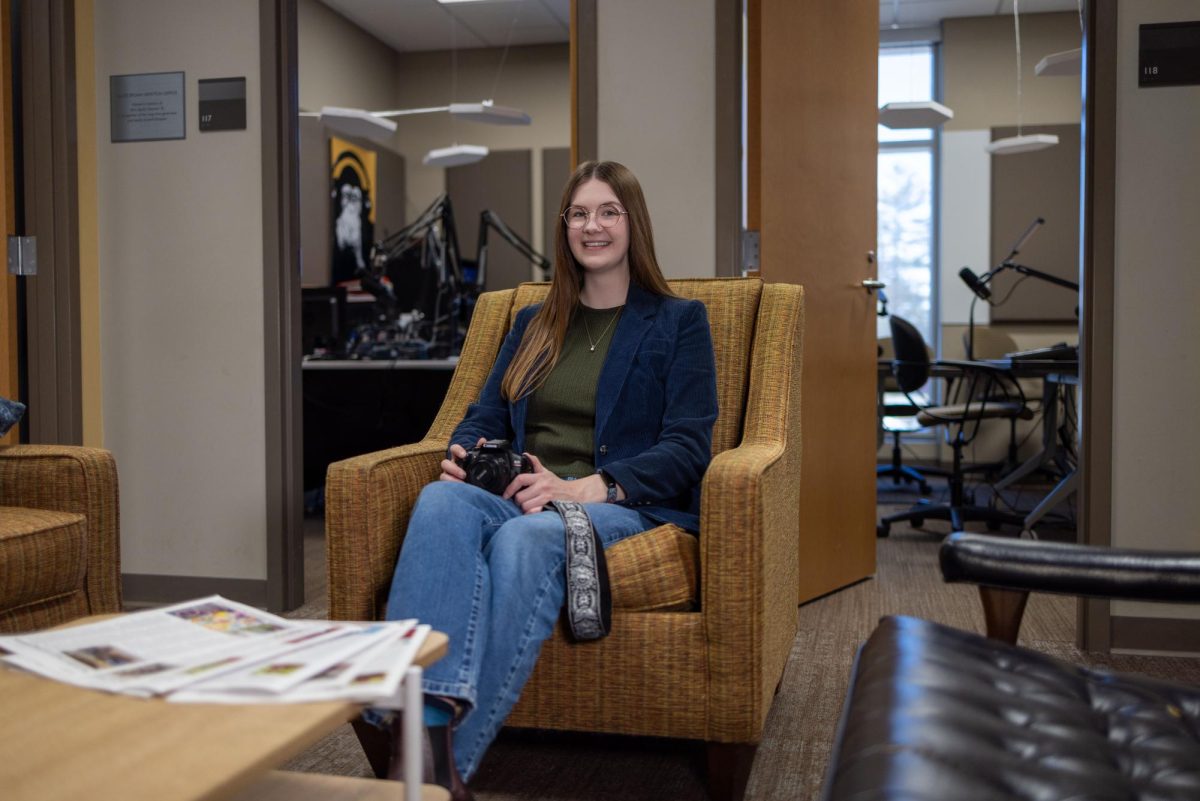
For junior student Maddie Waddingham, an Undergraduate Assistant (UGA) for speech and debate and admissions UGA, Mary Berry Hall has become a part of her daily routine.
On average, Waddingham estimates that she visits about three times a day for classes, meetings or practice sessions.
The mold was first discovered last year when the speech and debate team’s practice room had to be closed. Over the summer, Waddingham learned that the issue arose again while working for the Office of Admissions.
The repeated exposure to the mold made it a frustrating reality for those who frequent the building.
“This again, it seems like a usual problem with Mary Berry,” Waddingham said.
The recurrence gave the impression that the building’s problems were not temporary, but rather an ongoing issue. Communication from Simpson about the mold and the plan of action to take care of it was minimal.
Waddingham stated her coach, Tiana Brownen, was the one to inform the Speech and Debate team about the mold, as well as the staff’s plan to bleach the walls daily.
The speech and debate coaches were also assured the mold was not black mold, which can be dangerous upon exposure.
The mold caused both health concerns and disrupted routines of many. Two of the three speech and debate coaches were temporarily relocated to offices in Wallace Hall, and the team’s practices were moved to McNeill Hall.
“The offices in Wallace were nice, and the coaches ensured good communication with us,” but it was a bit inconvenient,” Waddingham said.
While the speech and debate team received regular updates from coaches, Waddingham said Simpson College offered no direct communication.
“I never heard anything directly from Simpson, only from my coaches,” she said. “Our coaches did a lovely job keeping us informed through email and talking to us at practice.”
Now the team’s room has been reopened, and Waddingham feels safe in Mary Berry, but she tries to limit her time there.
Going forward, she hopes the administration will communicate issues and take a more proactive approach.
For many students like Waddingham, the recurring mold problem serves as a reminder of the college’s facilities needing attention.
One professor, who requested anonymity, said they had not personally noticed signs of mold, but were not surprised when the issue was reported as the building is old and has had minimal modernization.
“Dean Harrigan’s communication was clear, professional, and reassuring,” the professor said. “The building has been functional, but it has clearly seen minimal modernization, which makes such issues more likely to arise.”
Since the discovery happened during the summer months, the professor reported there was no disruption to teaching or advising responsibilities, and didn’t feel there were any health concerns.
They credited Dean Harrigan for her initial outreach and Mary Berry’s office manager, Meghan Freise, for consistent follow-up updates.
“The consistency and transparency in these communications have been reassuring and demonstrate a commitment to addressing the issue responsibly,” the professor said.
Looking ahead, the faculty member emphasized the importance of prioritizing Mary Berry for regular maintenance and modernization.
“The building houses a significant number of classrooms, making it essential to campus operations,” they said. “It needs to be prioritized for care and updates so issues like mold don’t happen again.”
For now, Mary Berry has been deemed safe and reopened classrooms after the bleaching of walls.
Editor’s Note: The article incorrectly stated the mold found in Mary Berry was black mold. This error has been corrected and now states the mold found in Mary Berry was not black mold.