
Amid the scrutiny of TRIO programs across the nation, Simpson College’s own program is navigating changes in staff on campus. The program recently welcomed a new director after the departure of the previous director and two staff members.
TRIO was established at Simpson in 2005 and serves approximately 200 students on campus who are first-generation, have a disability or have limited income.
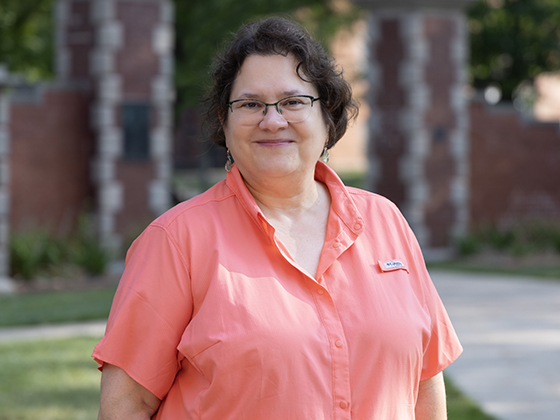
Carissa Deming joined the TRIO team as the program director on Sept. 11 and spoke about her excitement for the position.
“I just finished my master’s degree this summer, and I pursued it so I could become a director,” Deming said. “That’s been my ambition since I started in TRIO in 2020.”
Deming was previously an advising specialist at Black Hills State University, as well as the president of the South Dakota TRIO Organization. She talked about her excitement to implement departmental collaboration, work at Simpson and connect with students.
“ I really love the culture at Simpson, I love that everyone’s so friendly and everyone’s so excited to collaborate,” Deming said. “I’m really excited to get to know everyone, to get to know my students obviously, but to get to know staff and also to find ways to collaborate with other departments. I’m all about innovation and creativity.”
Although the role for program director is filled, the organization still has two vacant spots for TRIO staff members.
Grace Peterson, a 2025 Simpson graduate, recently joined the TRIO staff as an administrative assistant. She is dedicated and eager to provide students with the same community and experience she had during her time with TRIO.
Peterson credited the program for helping her succeed not only at Simpson, but now in graduate school.
“ I wanted to give back to the community that helped me succeed in college,” she said. “I know how important that community is to our students, so I really wanted to make sure I could foster that while being an employee here.”
Peterson also described how she is navigating the program being short-staffed as a new hire, and the struggles of having only three current employees. Peterson described her sadness regarding the departure of three staff members and how students will be affected.
“ I’m not gonna sugarcoat it, it has been a struggle. It’s sad to see three advisors go, who I was so personally connected to, that’s very difficult,” said Peterson. “Because for most of our students, that’s hard because those are the only people they’ve ever known.”
A current TRIO student, Jeri Eisbrenner, shared their positive experience with the program since they joined during their first year at Simpson.
“ I believe that TRIO is a home away from home for many students, and I believe that in some instances, TRIO is the home that many people wish that they had growing up in some instances,” Eisbrenner said.
Eisbrenner shared their thoughts regarding the sudden staffing changes within the program. They have concerns about how the lack of staff will affect the depth of attention and care advisors can give TRIO students with two vacant staff roles.
“ They can no longer give students the incredibly in-depth attention that they were once able to. That is not to say that students aren’t getting their needs met, but it does make things harder for both the students and the advisors,” said Eisbrenner. “Because they have to navigate taking care of 200 plus students that TRIO serves, whereas that work was at one point divided amongst four different people.”
Jack Simons, the Student Support Services Academic Advisor, was the only remaining advisor left on staff at the time the grant was renewed. Simons is starting his third year working for TRIO, and talked about the changes to come with a new director, while still honoring the strong foundation and legacy the outgoing staff built.
“ Stephanie Neve was the director for the last many years. She was great and really built a culture, and Monica Lewis and Tana Wagschal, that was our family in here for the last two years, it was really sweet,” said Simons.
Simons believed that students felt the family atmosphere in TRIO, which wouldn’t have been possible without the positive programs within TRIO that Neve helped maximize.
As TRIO programs are being analyzed nationally, the best way to support TRIO on campus during this transitional period is to continue advocating for the program, at the local, state and national level, according to Peterson and Deming.
“ I think the most important thing to do is for not just people involved in TRIO, but everyone across campus to advocate. I am always emailing and writing representatives, trying to advocate for TRIO to stay,” said Peterson. “I try to tell students the importance of advocacy when you are in a program like this that can be snatched away, you really have to advocate for yourself if you want it to stay.”
Deming emphasized the importance of personal success stories and data collection which prove TRIO’s importance for students and retention.
“ In South Dakota, when I emailed Senator Rounds or Senator Thune, I was like, ‘here’s our data, you can’t argue with that’,” Deming said. “And telling stories, I think that’s the other thing that will help us overcome challenges. You’re not just a data point, you’re a person with a story, and so being able to share those incredible stories of overcoming barriers and achieving dreams is what’s gonna really help.”