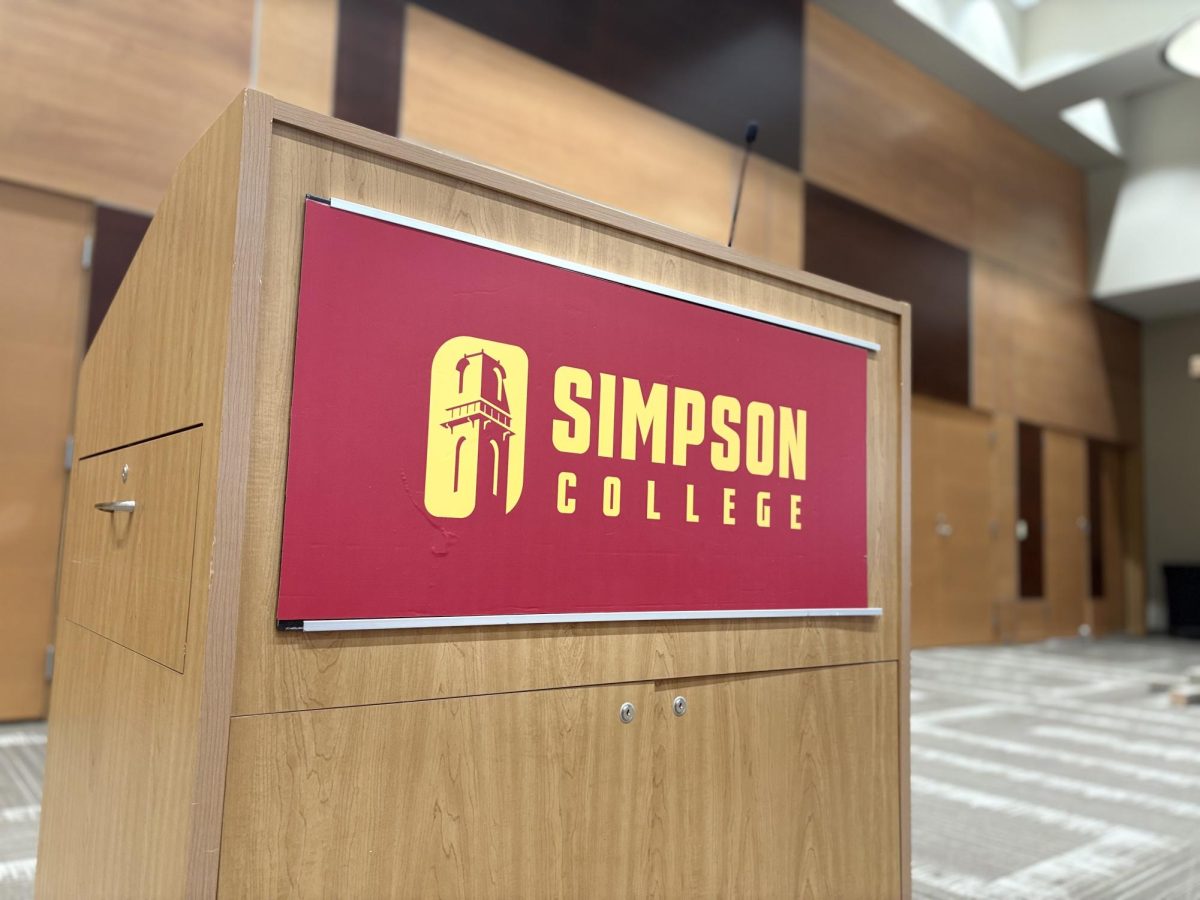
In continuation of Justice Week at Simpson College, a lecture organized by Associate Professor of Criminal Justice Denise Leifker. The lecture featured the author of “Hidden Scars,” Cheyenne Hanson, who spoke about sexual abuse and survivorship in Hubbell Hall on April 7.
Throughout the hour-long lecture, Hanson detailed the more than 15 years of sexual abuse at the hands of her stepfather, and explained how abuse can impact victims.
She said it started out in seemingly innocent actions, from watching and helping her bathe, to wrestling and tickle fights.
“He presented everything in a very fun manner,” Hanson said.
When she was six, he moved in with her and her mom, and his behavior escalated. She was forced to partake in sexual acts, and and intercourse up to four times a day by the time she was 13. He told her if she shared the information, no one would believe her, anyone she told would be in danger.
Hanson explained how young children are impressionable, and have limited abilities to understand what is normal or innocent, therefore victims can feel at fault or shameful based on what they are told.
“Those are very developmental years for a child,” Hanson said. “And now you’re telling them that if you tell anybody about these certain topics, that people are gonna die and it’s your fault, I’m gonna believe that.”
Abusers seek control of their victims’ lives and make these individuals feel powerless, as if there is no way out.
Hanson told the audience that as time went on, her stepfather expanded his influence into every aspect of her life. Her devices were tracked, and her relationships were watched. She said how for vicitms In the face of sexual abuse, coping mechinisms and finding trusted people can be helpful.
Hanson sought a constructive way to channel her stress and emotions, and became active in sports and weightlifting as a result. In college, the threat of abuse grew as her stepfather reasoned that she was an adult and his actions were legal. After periods where she could not eat from the thought of this reality, she told her basketball coach she needed help and was eventually directed to an advocacy center.
Her stepfather was eventually arrested before being released from initial custody after early investigation. He then intentionally walked into oncoming traffic.
Throughout her speech, Hanson said people who advocated for her helped save her life. Apart from telling her story, she used the lecture to tell audience members the importance of helping those affected by sexual assault.
“There are so many avenues of advocacy you can get involved in,” Hanson said. “You can go into law enforcement, you can go into counseling, you can go into advocacy at the centers and go and be that advocate sitting across the table.”
As she spoke to the audience, some had tears in their eyes, while others said her story was powerful.
“I thought it was a very emotional lecture,” junior MacKenzie Pierson said. “I think she did an excellent job.”
Leifker hopes students take away the fact that they are capable of having a bright future despite their hardships.
Hanson mentioned how victims are not a product of what has happened to them, they can be something more.
“It doesn’t define you and you can live past it and you can still go live a normal life,” Hanson said.
Today, she works as a sheriff’s deputy, as well as an author and advocate who speaks at events.
Victims of sexual assault can contact Simpson’s Sexual Assault Response Advocate (SARA) number at 515-330-6392 , the National Sexual Assault Hotline at 1-800-656-HOPE or the National Suicide Hotline at 988 for help.