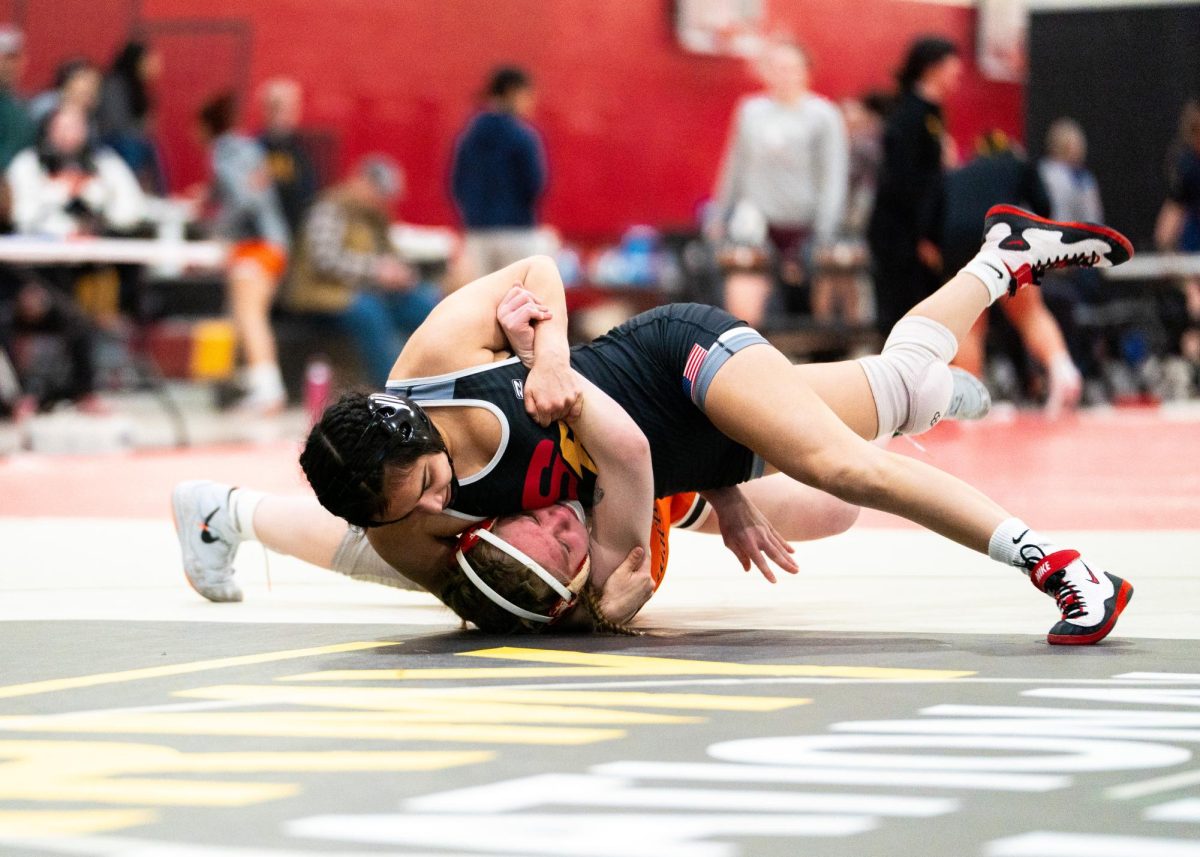
Beginning in the 2027-28 academic year, women’s wrestling will have the opportunity to compete for an NCAA national championship at the Division III level.
Women’s wrestling currently has a national championship, but all divisions compete against each other. The addition of a national championship for Division III reflects the sport’s rapid expansion over the past decade. Participation in women’s wrestling has increased as more high schools and colleges have adopted the sport into their programs.
Simpson College’s women’s wrestling program will benefit from the change, especially when it comes to recruiting. The chance to compete for an NCAA title gives the program something new to offer for student-athletes and adds another level of excitement to the sport.
While some current Simpson wrestlers will not be eligible to compete during the 2027-28 season, many still see the change as an important step for women’s wrestling.
“For me personally, I won’t have the opportunity to win an official Division III championship title,” junior wrestler Jalynn Goodale said. “But I think this opportunity will open a lot more doors for female wrestlers moving forward.”
Goodale also pointed out how important Division III programs have been in the sport’s development.
“Most women’s wrestling programs are at the Division III level, so I hope this gives more recognition to the schools that really helped build the foundation of collegiate women’s wrestling,” she said.
Division III student-athletes compete without athletic scholarships, but Goodale said the love of the sport and the culture of the program often outweigh financial benefits.
She also said the opportunity to compete for a national championship gives athletes another reason to compete at a high level, especially when there is a clear end goal. She believed this speaks to the strength and dedication of Division III women’s wrestling.
As participation in the sport grows across the country, the long-term future looks bright for women’s wrestling.
“I hope that this new change does help with recruiting for our team and bringing new girls,” junior wrestler Sarah Zimmerman said. “I know a lot of the recruits initially look to the Division I route, and especially Division II schools, because they might think there is a better chance or opportunity for them to become an All-American with it being all divisions right now.”
Zimmerman said she hopes the splitting of classes might give more girls an opportunity to become an All-American.
The addition of a Division III national championship creates a clearer future for student-athletes who want the opportunity to compete for a title at the collegiate level. The NCAA’s decision represents a milestone for the sport and an important step forward for women’s athletics.
Zimmerman reflected on how the knowledge of a national championship would have impacted her recruiting decisions.
“I don’t think it would have affected me much. I always knew I wanted to wrestle in college, regardless of my knowing I would have to go against Division I and Division II schools. I personally enjoy the competition of going against the bigger schools,” she said. “Although we are in different divisions, some of these Division III girls can compete neck and neck with the other divisions.”